

Cast your mind back to the pandemic, perhaps one of the bigger upheavals we faced in recent years. In the first few weeks that turned into months, I didn’t really know what was going on. It was one of my first experiences of genuine uncertainty as a leader.
At the time I was managing director of Amazon Advertising in the UK and this was context without a playbook so I held a virtual stand up every day. It seemed the right thing to do. There were so many attendees I couldn’t see all the Zoom boxed tiles to look everybody in the eye. But I showed up, shared what information I had, and let us all have the chance to share what we did or didn’t know.
I was part of the same pattern with my retail colleagues joining the MT daily. We passed what information we had back and forth. The right thing to do in retail looked very different to advertising. E-commerce took off, but for ads there were different nuances of what was right. Even different parts of the same company had a new reality. We had to change our game too in many ways and communication was a must for me.
Fiona’s radio show was born
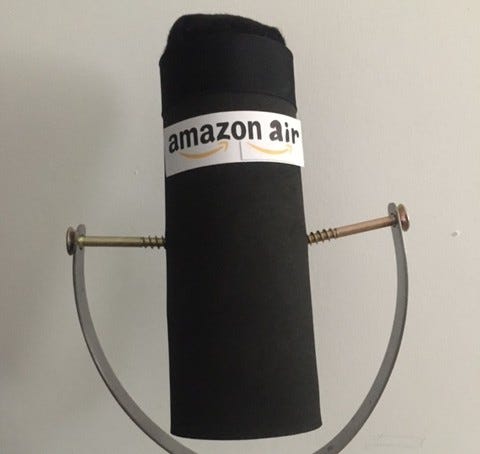
As the weeks progressed and my children joined me at home for permanent schooling, together with my husband they made me a microphone. “It’s for your radio show,” they said. It became a regular spot, 9 o’clock every morning. People tuned in even when there was nothing to share, simply to know they hadn’t missed anything. We joked about it being Fiona’s radio show. Those sessions held many good memories alongside the scary times, as we got creative and people brought themselves to work, families sometimes too.
The most uncertain of times brought out different behaviours. Some people rose to the challenge while others shrank away. There were no right answers nor a clear route out. I did what I could do, and what I could stand for, was the certainty of the new working day format. Regardless of the news, Fiona would be there at 9am. There was an invitation to join.
Uncertainty shapes us
When I look at the challenges today, the world is different but no less uncertain. AI now the big thing that cause anxiety and more questions that in can answer is perhaps bringing more upheaval than the pandemic. Leadership is shaping itself around these developments right now and so it seems a perfect moment to get rid of what isn’t working.
Leaders exist to serve the people in their care yet we often forget that perspective in favour of outcomes and results.
People expect leaders to explain what’s happening. What AI means for jobs. Whether a strategy will work. What’s going to happen to the market. And answer ‘will everything be ok?’ And so leaders build another analysis, another forecast, another scenario, add another meeting, another data point. But much of it is futile, because none of it solves the actual problems we have. Strip
ping it back to basics we can see that uncertainty is simply a set of conditions in which judgement is needed to decide.
The future can’t give people certainty. But we can.
I’m not suggesting we start to make every decision the same predictable outcome. But we could show the way we decide, and make that reliable and repeatable. Context changes, evidence changes, circumstances change and judgement should be capable of changing with them.
During Covid, people understood what mattered to me because I shared it – including my kids hiding under the table in meetings – many of us needed different attention in those times and hiding it was not always an option. But it built trust through vulnerability. The human was there.
Decisions need the human edge too
But when you make decisions, do people know what matters to you? Can they see the principle you return to time after time? Do they know if you’ll listen, if you’re open to changing your mind when the evidence shifts, if you’ll admit when you don’t know something and take accountability once the call is made?
Think about the leaders you have trusted over the years. Were they always right? In my case, I can say they weren’t. Did they know what was coming next? Most certainly not either. But I did learn who they were, and how they chose and then their actions became consistent enough for me to anticipate how they’d respond.
When the certainty of an outcome isn’t possible, having your judgement visible becomes invaluable.
Uncertainty creates a void, and so people fill it. If they don’t understand how you reached a decision, they’ll speculate about motive. When yesterday’s decision looks inconsistent with today’s one and nobody understands what changed, then your credibility comes into question too. When leaders pretend to have certainty about things when everybody knows they’re actually uncertain about, people notice. Trust erodes.
Resist the temptation to solve
We’re entering a period where leaders have extraordinary amounts of information. Predictions, analysis, scenarios. There’s a temptation to manufacture certainty from all of it. But information alone doesn’t remove the need for judgement. Somebody still has to decide what matters, which risks to take, what to prioritise, what the organisation will and won’t do, and then stand behind it. That’s human work. Data narrows the field, leaders decide.
If people can’t understand how you reached a decision, it’s much harder for them to trust it. So let them see the human instead of the pretence of having all the answers. Be comfortable saying “I don’t know,” then follow it up with what you do know, what you’re trying to understand, and what they can expect from you while you work it out.
Stop asking yourself how you can give your team more certainty. Ask instead:
In what ways can my people be certain of me?
Certain I’m telling the truth even when it’s uncomfortable.
Certain I’ll listen before I decide.
Certain I’ll distinguish between what I know and what I believe.
Certain I won’t put my values aside when pressure rises.
Certain I’ll explain, honestly, when things change.
Certain I’ll have their back once a decision goes forward.
Nobody can tell people exactly how the story ends. But we can give people something they can rely on instead.
Every 9 o’clock, whether or not there was news, I showed up. Very soon the radio show was not about the information, rather it was one thing that became certain in the day. It was the real leader going through the uncertainty too, sharing, and making pieces of certainty for others in the process. It was proof of raw judgement in action.
Look again this week: If you are carrying a decision this week. Why not share the principles behind the decision itself, not just rehearse the outcome.
Have a good week.
Fiona
Look again. See what was always there.